
You've probably been told that you can't control your heart rate. That it's an involuntary function, like digestion or pupil dilation—something your body handles without your input. And technically, you can't reach in and grab the dial directly. But you have a lever that's directly wired to it, and you use it about twenty thousand times a day without thinking.
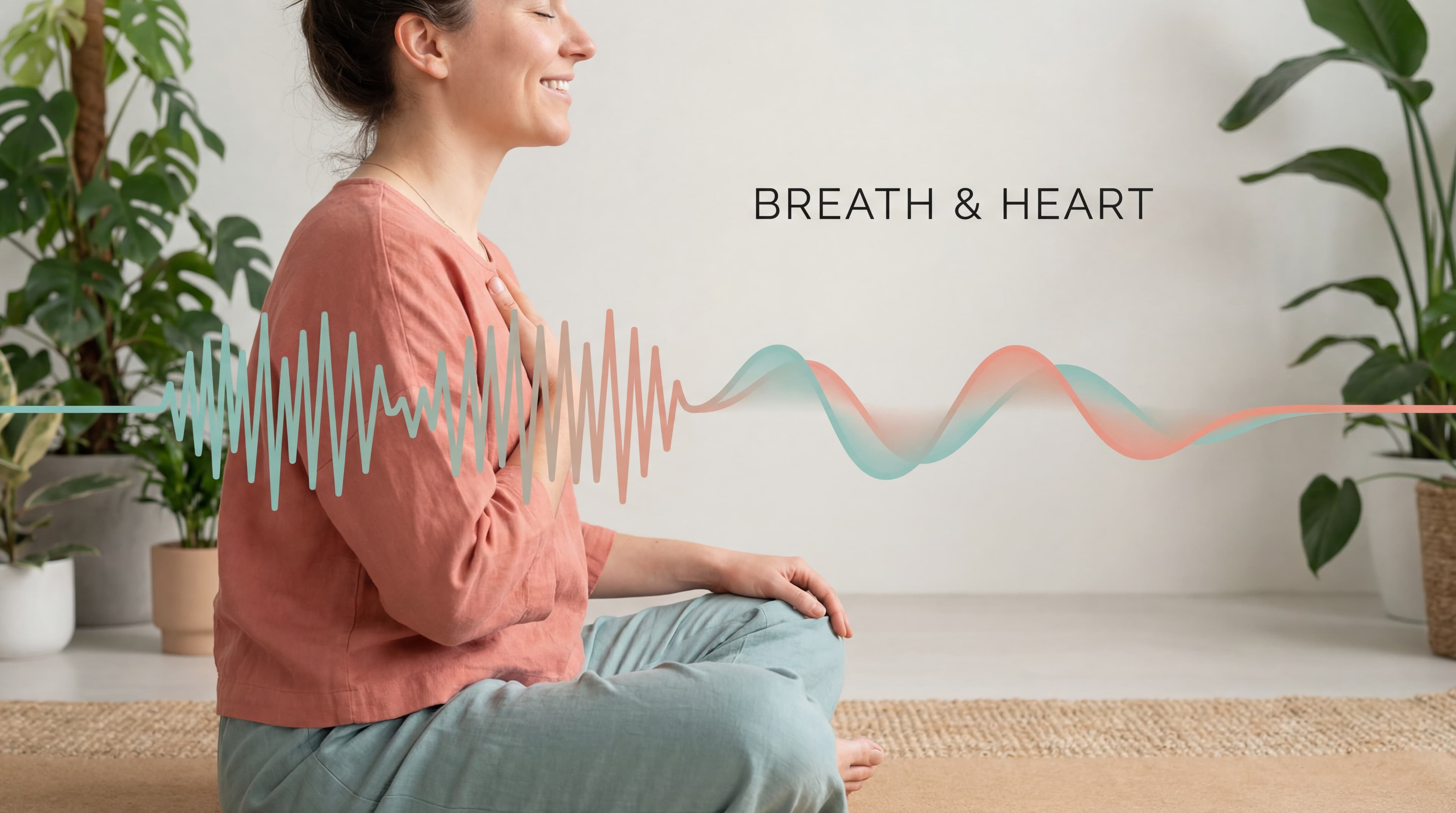
Every time you inhale, your heart speeds up. Every time you exhale, it slows down. This isn't some subtle, barely-detectable effect—it's a consistent, measurable rhythm happening inside your chest right now. Once you understand it, you can use your breath to calm down before a difficult conversation, settle a panic swell, or sharpen up when you're dragging. No app, no wearable, no middleman.
Why Your Heart Speeds Up When You Breathe In
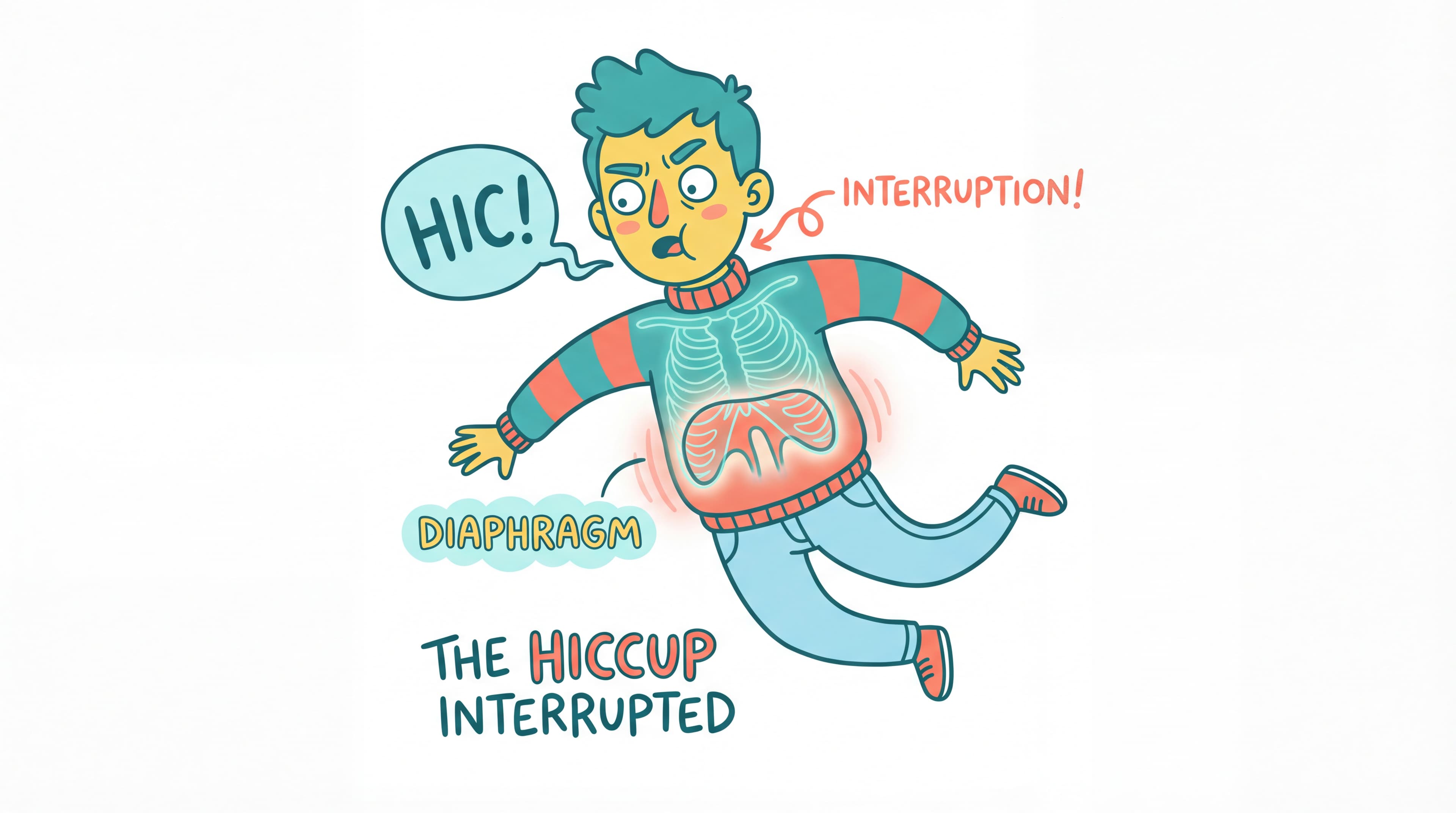
When you take a deep inhale, your diaphragm contracts and pulls downward, expanding your chest cavity. This expansion gives your heart a little more room, which causes it to stretch slightly. When the heart stretches, blood inside it moves a bit more slowly—and sensors in your cardiovascular system detect this dip. Their response is immediate: they signal your nervous system to pick up the pace. "Pump faster," they say, "we need to maintain output."
Your heart rate ticks up.
When you exhale, the opposite happens. Your diaphragm relaxes and moves upward, the chest cavity gets smaller, and the heart is gently compressed. Blood flows faster through the tighter space, the sensors detect the increased flow, and they tell your nervous system to ease off. Your heart rate drops.
This oscillation—heart rate rising on the inhale, falling on the exhale—is called respiratory sinus arrhythmia, and despite the ominous-sounding name, it's actually a sign of a healthy, flexible nervous system. The more pronounced it is, the better your body is at adapting to moment-by-moment demands.
Using This to Calm Down
Knowing that exhales slow your heart gives you a straightforward strategy for any moment when you need to dial things down: make your exhales longer than your inhales.
Before a presentation, during a tense meeting, in the middle of an anxiety spike—the protocol is the same. For one to three minutes, breathe in through your nose for about four seconds and out through your mouth or nose for six to eight seconds. That's it. The longer exhale gives your heart more time in its "slow down" phase during each breath cycle, and the cumulative effect over a dozen or so breaths is tangible. You'll feel slightly heavier, more grounded. Your heartbeat will soften. The tension in your shoulders and jaw will start to release.
This isn't a relaxation trick or a placebo. It's a direct mechanical and neurological pathway: longer exhale means more parasympathetic activation via the vagus nerve, which means your heart physically slows.
Using This to Wake Up
Sometimes the problem isn't anxiety—it's flatness. You're sluggish, you need to be "on" in thirty minutes, and coffee hasn't kicked in yet. Or you're about to exercise and your body feels like it's still in bed.
In these moments, flip the ratio. Emphasize your inhales instead. For thirty to sixty seconds, breathe in through your nose for three to four seconds and out for just two to three. The shorter exhale gives your heart less time to slow down each cycle, and the net effect is a gentle uptick in heart rate and alertness. You should feel a slight energetic lift—not a jolt, but a brightening.
One important caveat: if you're prone to anxiety or panic, skip this one. Inhale-heavy breathing increases arousal, and if your system is already running hot, you don't want to add fuel. Stick to exhale-focused patterns.
Making Sense of Common Breathing Practices
Once you understand the inhale-exhale seesaw, a lot of popular breathing techniques stop being mysterious and start being obvious.
The physiological sigh—two inhales followed by a long exhale—is net exhale-heavy. It calms and resets. Box breathing—equal inhale, hold, exhale, hold—is perfectly balanced. It stabilizes without pushing you in either direction, which is why it feels centering rather than sedating. Cyclic hyperventilation—strong repeated inhales with short passive exhales—is dramatically inhale-heavy. It cranks arousal up, flooding your system with adrenaline and energy.
Every breathing technique is, at its core, just a different balance of inhales and exhales. Once you see the pattern, you can stop memorizing protocols and start thinking in terms of what you want your heart (and mind) to do.
Real Situations, Real Tools
"My heart is pounding and I'm spiraling." Start with one to three physiological sighs to interrupt the pattern, then shift to two or three minutes of exhale-heavy breathing: four seconds in, six to eight seconds out. The sighs break the acute spike; the slow breathing brings you back to baseline.
"I'm exhausted but need to be sharp for the next thirty minutes." Do about one minute of inhale-heavy breathing: three to four seconds in, two to three seconds out. Then return to normal breathing. This is a short-term accelerator, not a lifestyle—don't push it longer than you need to.
"I just want to feel steady and composed." Box breathing for two to five minutes. Inhale four seconds, hold four, exhale four, hold four. This smooths out the variability in your heart rate and creates a feeling of centered control. It won't make you sleepy or wired—just even.
Feel It for Yourself
Here's a two-minute experiment you can try right now. Sit down, place a hand on your chest or find your pulse at your wrist. Take five or six breaths where you deliberately make your inhales longer than your exhales—maybe four seconds in, two seconds out. Pay attention to what happens under your fingers.
Then switch: five or six breaths where the exhale is twice as long as the inhale—maybe three seconds in, six seconds out.
Most people can feel the difference clearly. Heart rate gently rising with inhale-focused breathing, gently falling with exhale-focused breathing. It's subtle enough that you might miss it if you're not paying attention, but once you've felt it in your own body, you'll never forget it's there.
That's the point. You've always had this lever. Now you know how to use it.
About the Author: Marco Salcedo writes about simple, science-based tools for regulating stress and improving performance. His work focuses on practices you can use in real time, without special equipment.