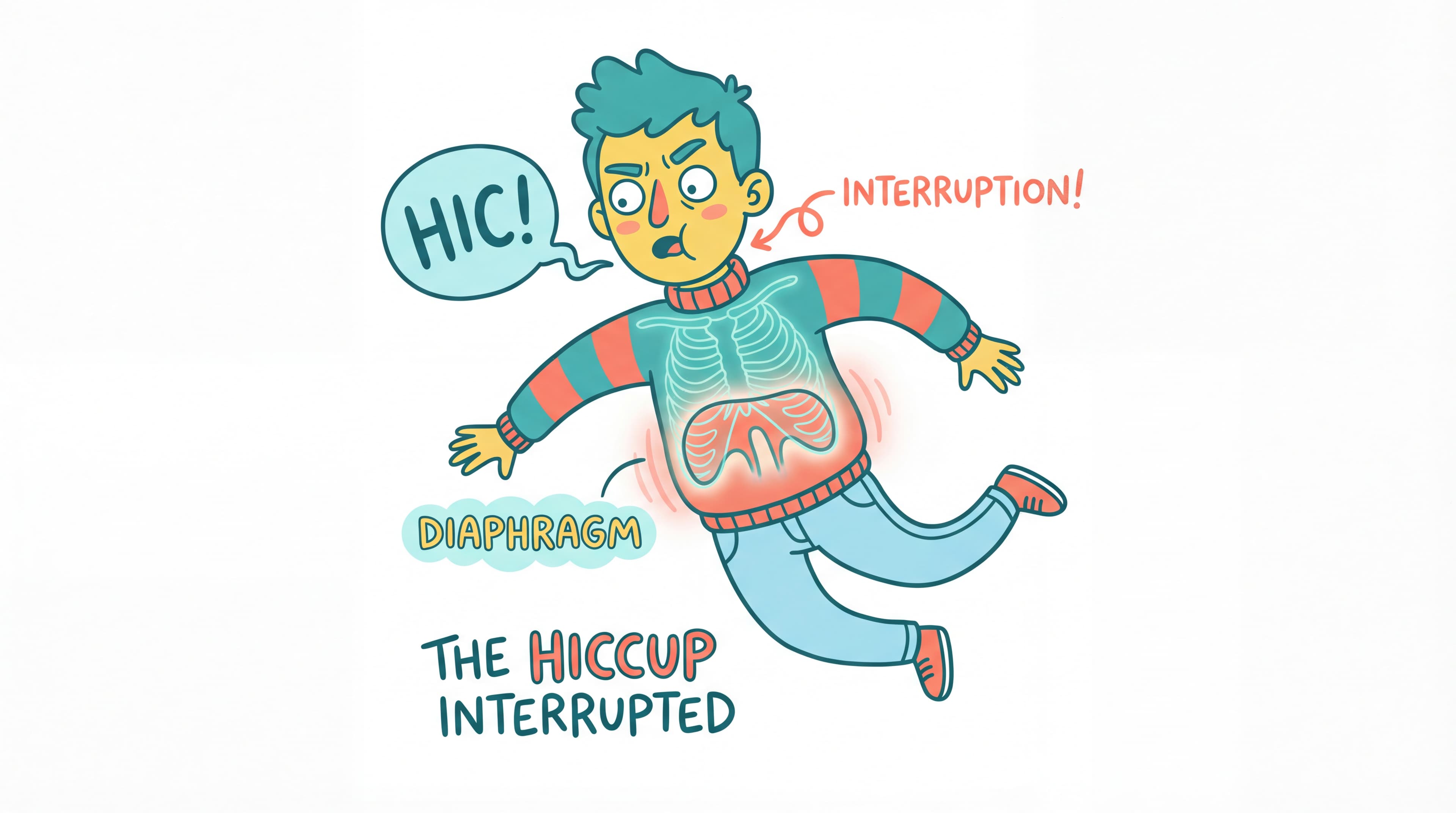

You're sitting in your car after a brutal meeting. Your jaw is clenched, your chest feels tight, and your mind is looping through every stupid thing you said (or didn't say). You know you "should" meditate, but you're not going to sit cross-legged in a parking lot. You know you "should" journal, but you're too wired to hold a pen steady.
What if you could reset your nervous system in the time it takes to tie your shoe?
That's the physiological sigh—one specific breathing pattern that shifts your body from fight-or-flight toward calm in about ten seconds. It's not a wellness trend. It's a reflex your brain already uses during sleep and crying to rebalance itself. You're just learning to do it on purpose.
Here's How It Works
A physiological sigh is a double inhale followed by one long exhale. That's it.
Inhale deeply through your nose. Before you exhale, sneak in a second, shorter inhale through your nose—a little top-off, like topping off a glass of water. Then let everything out through your mouth, slow and steady, until your lungs feel empty.
It looks like this: long inhale… quick sniff on top… slow, full exhale.
The first time you try it, it might feel a little awkward—like you're breathing wrong on purpose. That's fine. You'll feel the effect within one or two rounds.
Why Something So Simple Actually Works
When stress hits, your breathing gets shallow and fast. You start blowing off too much CO2, and the tiny air sacs in your lungs—called alveoli—can partially deflate, kind of like a balloon that's lost some of its air. Your body is getting oxygen in, but it's not doing a great job using it.
The physiological sigh fixes this from the bottom up. That first big inhale reinflates your lungs. The second little sniff specifically pops open those collapsed alveoli, maximizing the surface area where gas exchange happens. And the long exhale is where the real magic is—it activates the vagus nerve, which tells your heart to slow down and your nervous system to stand down.
The result is a fast, physical shift away from "something is wrong" and toward "I'm okay." Not because you told yourself a mantra, but because you changed your body's chemistry and your brain followed.
The Research Backs This Up
In a controlled study comparing breathwork techniques head-to-head with meditation, participants who practiced cyclic sighing—basically repeating this pattern for five minutes a day—showed greater reductions in stress, better mood, and improved sleep than those who did mindfulness meditation, box breathing, or cyclic hyperventilation.
That's not to knock meditation (it's great for long-term focus and emotional awareness). But if you need something that works right now, in the middle of your actual chaotic life, the physiological sigh has it beat.
Two Ways to Use It
As an emergency brake. This is the everyday use case. You feel a spike of stress—an email that makes your stomach drop, your kid screaming in the grocery store, that moment before you step on stage—and you do one to three physiological sighs. Just breathe, reset, and move on. Nobody around you even needs to know you did it.
As a daily five-minute practice. Set a timer, sit or lie somewhere comfortable, and repeat the pattern: double inhale through the nose, long exhale through the mouth. Keep it smooth—not forceful. If you start feeling lightheaded, you're pushing too hard; dial it back. Over a few weeks of doing this once a day, people often notice they're less reactive in general. Sleep comes easier. That low-grade hum of anxiety starts to quiet down.
A Few Things Worth Knowing
For the inhales, breathe through your nose. Nasal breathing gives you better control, adds a bit of resistance that helps your lungs inflate more fully, and supports nitric oxide production (which helps with blood flow). For the exhale, use your mouth—it lets you draw out a longer, more controlled release, which is what drives the calming effect.
How many sighs do you need? For real-time stress, one to three is usually enough. For the daily practice, five minutes works out to roughly fifteen to thirty cycles. You don't need to count—just breathe until the timer goes off.
Can you overdo it? Technically yes, if you crank up the intensity and start forcing huge breaths. The whole point is gentle and controlled. You should feel more grounded afterward, not wired or dizzy.
And if you have uncontrolled cardiovascular issues, severe respiratory illness, or a history of panic attacks triggered by deliberate breathing, start gently and consider checking with your doctor first.
Try This Tonight
Pick one moment from your daily routine that reliably stresses you out. Maybe it's opening your inbox first thing in the morning. Maybe it's the transition from work to home when your brain won't stop spinning. Maybe it's lying in bed while tomorrow's to-do list plays on repeat.
Next time that moment hits, do one physiological sigh. Just one. Notice what your shoulders do. Notice what happens to the tightness in your chest. Then go about your evening.
You're not trying to eliminate stress from your life—that's not how any of this works. You're building a skill: the ability to catch yourself in a stress spiral and pull the lever that brings you back down. Ten seconds, no equipment, and nobody has to know you're doing it.
About the Author: Marco Salcedo writes about simple, science-based tools for regulating stress and improving performance. His work focuses on practices you can use in real time, without special equipment.